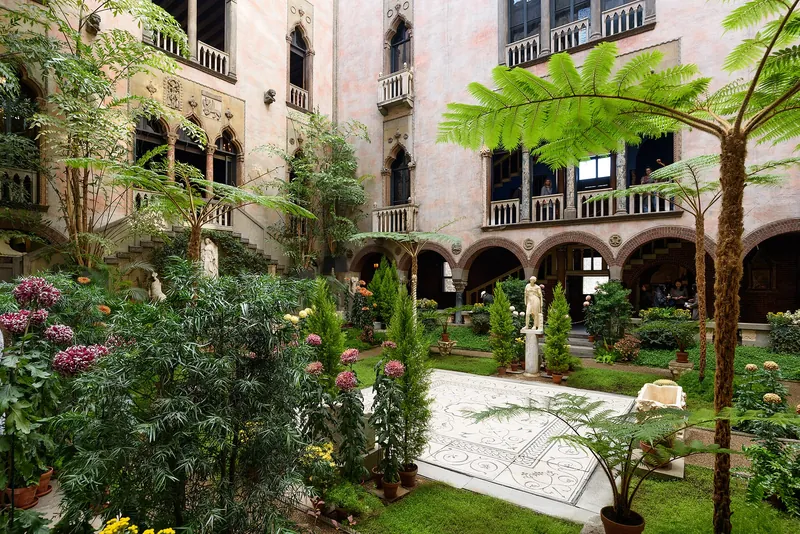
The biggest art theft in history began with a buzzer, a uniform and a guard who opened a door he shouldn’t have.
Two men in police uniforms
In the early hours of 18 March 1990 two men in police uniforms rang the intercom at the Isabella Stewart Gardner Museum in Boston, saying they were answering a disturbance. The guard on duty broke protocol and let them in. Both guards were taken to the basement and restrained. Gardner Museum
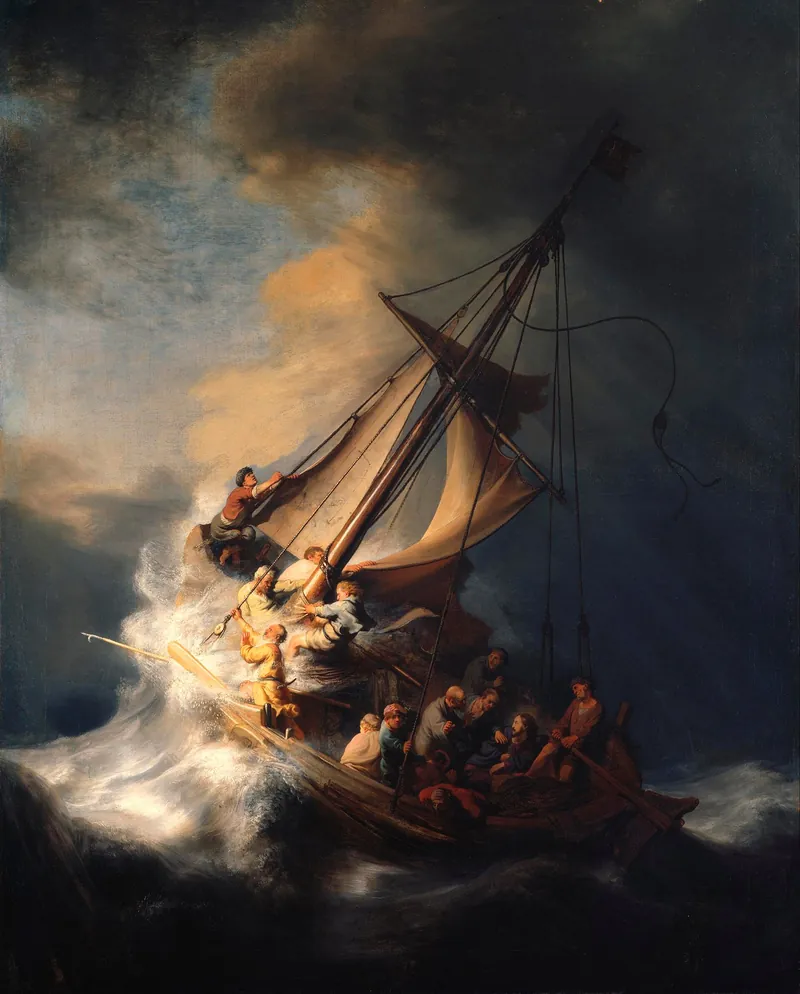
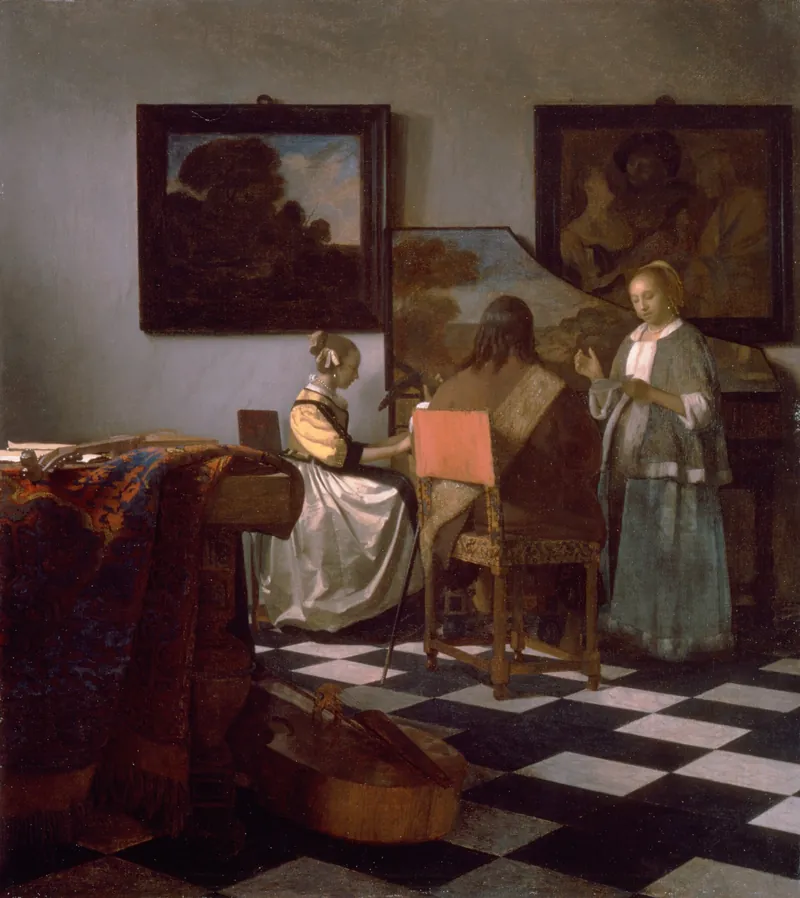
In the Dutch Room the thieves cut Rembrandt’s Christ in the Storm on the Sea of Galilee and A Lady and Gentleman in Black out of their frames, took Vermeer’s The Concert and a landscape by Flinck, a Chinese bronze beaker and a small Rembrandt etching. Elsewhere they took five works by Degas, a bronze eagle finial and Manet’s Chez Tortoni. Gardner Museum
They left at 2:45am, 81 minutes after they arrived, making two trips to their car. Gardner Museum The guards stayed handcuffed until police arrived at 8:15am. Gardner Museum
Still missing
The museum calls it the largest art heist in history, with more than $500 million of artwork taken. The Concert is one of only 36 paintings by Vermeer, and The Storm on the Sea of Galilee is Rembrandt’s only known seascape. Gardner Museum The FBI calls it the world’s largest property crime. FBI
The museum offers a $10 million reward for information leading to the return of all 13 works in good condition, and a separate $100,000 for the eagle finial. Gardner Museum It first offered $1 million; in 1997 it raised that to $5 million, then the largest private reward in the world. Gardner Museum
Why the frames are still there
Isabella Stewart Gardner’s will says the collection must stay as she arranged it. “We don’t add to the museum. We don’t sell anything, and we don’t rearrange anything,” the museum’s director of conservation told CBS Boston in 2025. So the empty frames still hang, waiting. CBS Boston