Some paintings have a secret underneath. In one famous case the secret was hidden by someone else; in another, the artist hid it himself.
Vermeer’s missing Cupid
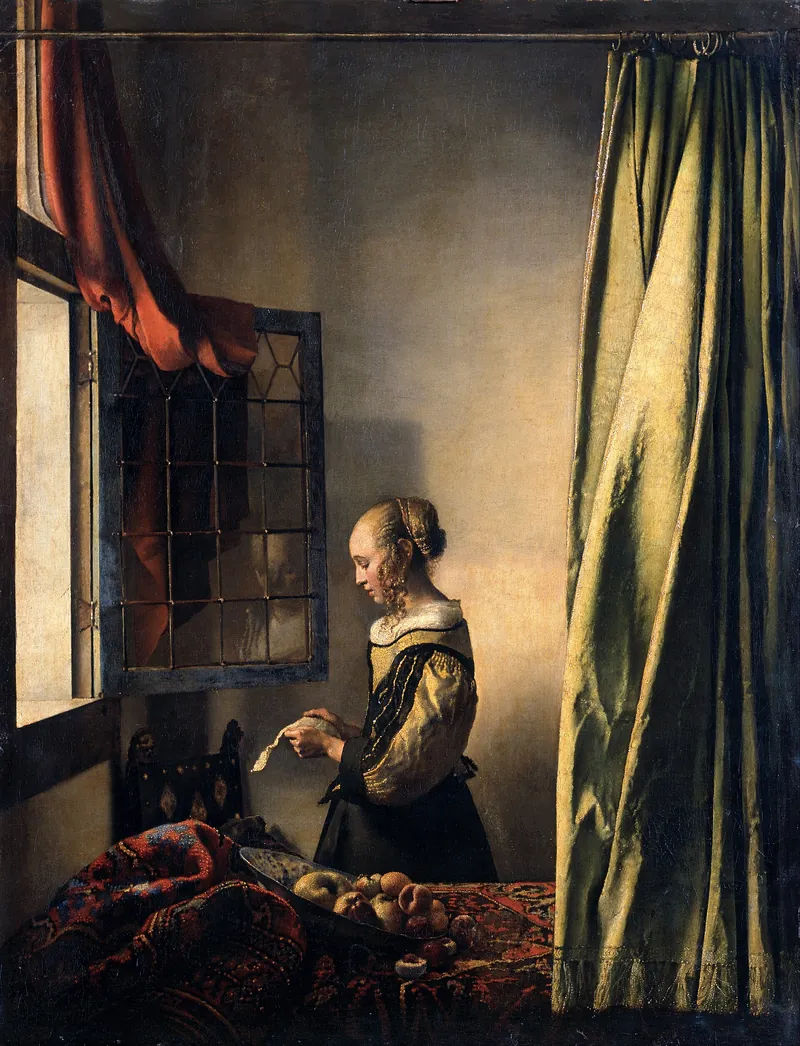
Vermeer painted Girl Reading a Letter at an Open Window around 1657–59. It was bought in Paris in 1742 for the Saxon Elector’s collection, and it has belonged to Dresden’s Gemäldegalerie ever since. Dresden State Art Collections
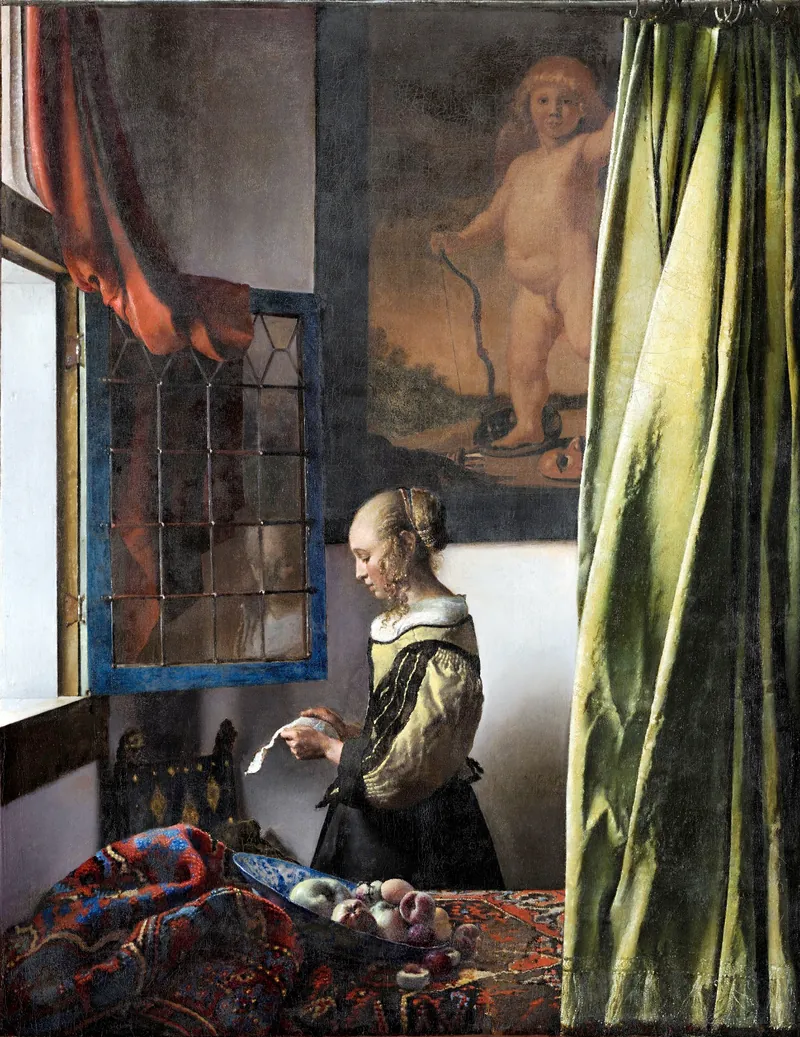
An X-ray in 1979 showed a picture of a nude Cupid on the back wall, completely painted over. For decades experts assumed Vermeer had changed his mind and covered it himself. Dresden State Art Collections
A research and restoration project that began in 2017 found otherwise. Layers of old binding agent and dirt lay between Vermeer’s paint and the overpaint, so decades must have passed before someone else covered the Cupid. Gemäldegalerie Dresden In 2018 the museum decided to remove the overpaint. Restorer Christoph Schölzel finished in early 2021, revealing a standing Cupid with a bow, arrows and two masks. Dresden State Art Collections He worked with a fine scalpel under a microscope. Gemäldegalerie Dresden
Nobody yet knows who painted Cupid out, or exactly when. Gemäldegalerie Dresden
The woman under the grass
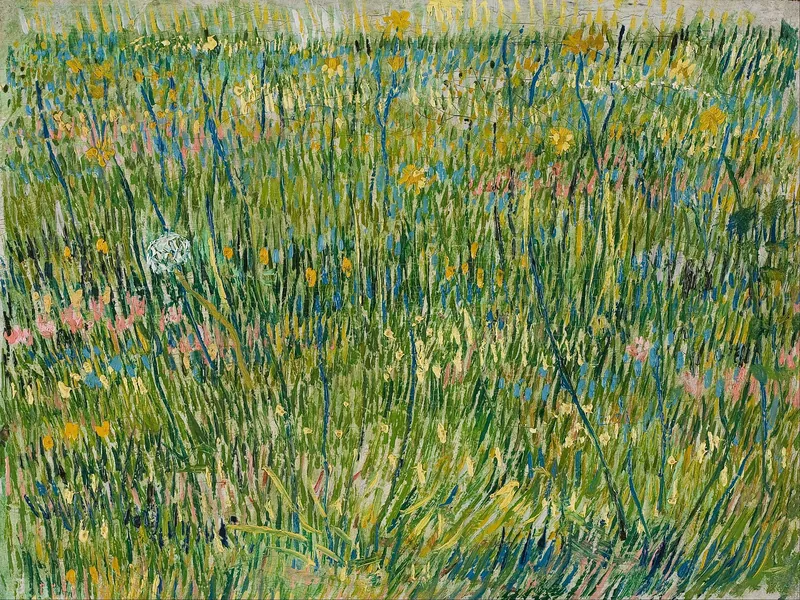
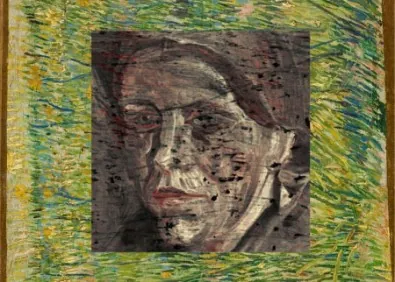
Van Gogh often reused canvases. A 2008 study notes that this is thought to be true of about one-third of his early paintings. Analytical Chemistry, 2008 Patch of Grass, painted in Paris in 1887 and owned by the Kröller-Müller Museum, was known to hide the vague outline of a head. The Guardian
Scientists scanned it with a synchrotron, a particle accelerator that makes intense X-rays. Maps of mercury (from red vermilion) and antimony (from Naples yellow) let them rebuild the colours of a woman’s face in remarkable detail. Analytical Chemistry, 2008