Most forgers spend their lives hoping nobody finds out. Han van Meegeren ended up having to prove, in front of witnesses, that he was one.
A fake that hardened like the real thing
Van Meegeren (1889–1947) turned to forgery after critics were unkind about his own work, and produced fake 17th-century Dutch masters such as Vermeer, Pieter de Hooch and Frans Hals. Winterthur Museum
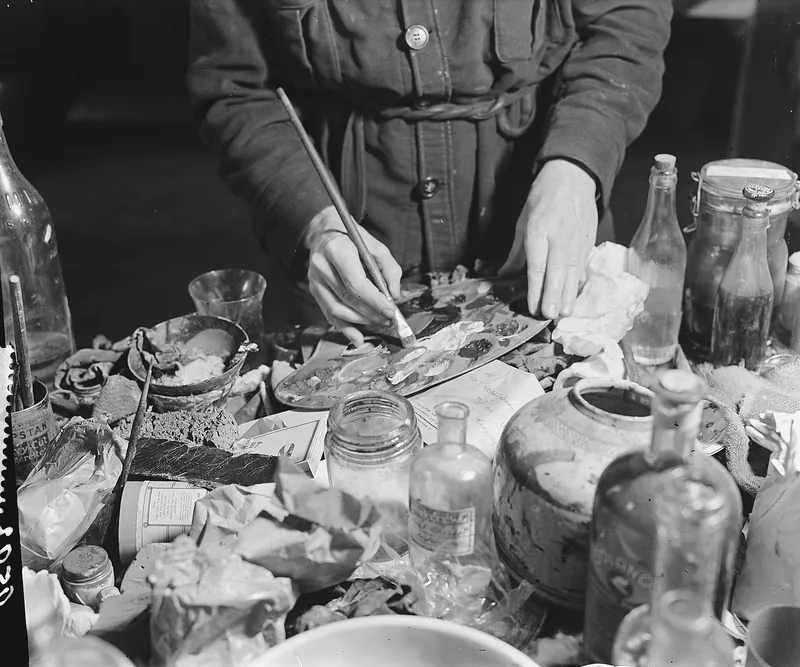
His trick was chemistry. In his day, one test for a new painting was to dab it with alcohol or push in a hot needle: fresh paint came off or gave way. Van Meegeren mixed in Bakelite, an early plastic, which hardened the surface and beat both tests. Winterthur Museum
Treason, or fraud?
After the war a ‘Vermeer’ called Christ and the Adulteress turned up in the collection of Hermann Göring. Van Meegeren was arrested and charged with selling Dutch cultural heritage to the Nazis, a charge that carried the death penalty. His surprising defence was that he had painted it himself. Winterthur Museum
To prove it, he painted one more ‘Vermeer’, Jesus among the Doctors, in 1945 while under arrest, watched by reporters and court-appointed witnesses. Vermeer Gallery His trial opened on 29 October 1947 in Room 4 of the Regional Court in Amsterdam. Essential Vermeer He was convicted of forgery and fraud, given one year in prison, and died before serving it. Winterthur Museum
Still fooling people in 2011
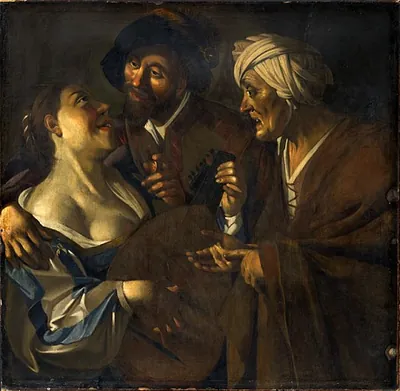
The Courtauld Gallery in London owns a copy of Dirck van Baburen’s The Procuress, given in 1960 by Geoffrey Webb, one of the wartime “Monuments Men”, who believed van Meegeren had painted it. A 2009 analysis found no modern pigments, but later tests found Bakelite. Van Meegeren is the only forger known to have used it, so the painting is now attributed to him: authorship long suspected, confirmed only in 2011. Winterthur Museum